




UNDERSTANDING HAIR TRANSPLANT
IS SHOCK LOSS NORMAL IN MY HAIR TRANSPLANT?
May
When a person undergoes a hair transplant, one of the most anticipated moments is to see the hair grow back with density and naturalness. However, it is common that a few weeks after the procedure, there is a phenomenon that generates concern: the shock loss or temporary hair loss after the transplant. In this article we explain why it happens, if it is normal, how long it lasts and how to manage it properly so that it does not affect your recovery process or your expectations.
WHAT IS SHOCK LOSS AFTER HAIR TRANSPLANT?
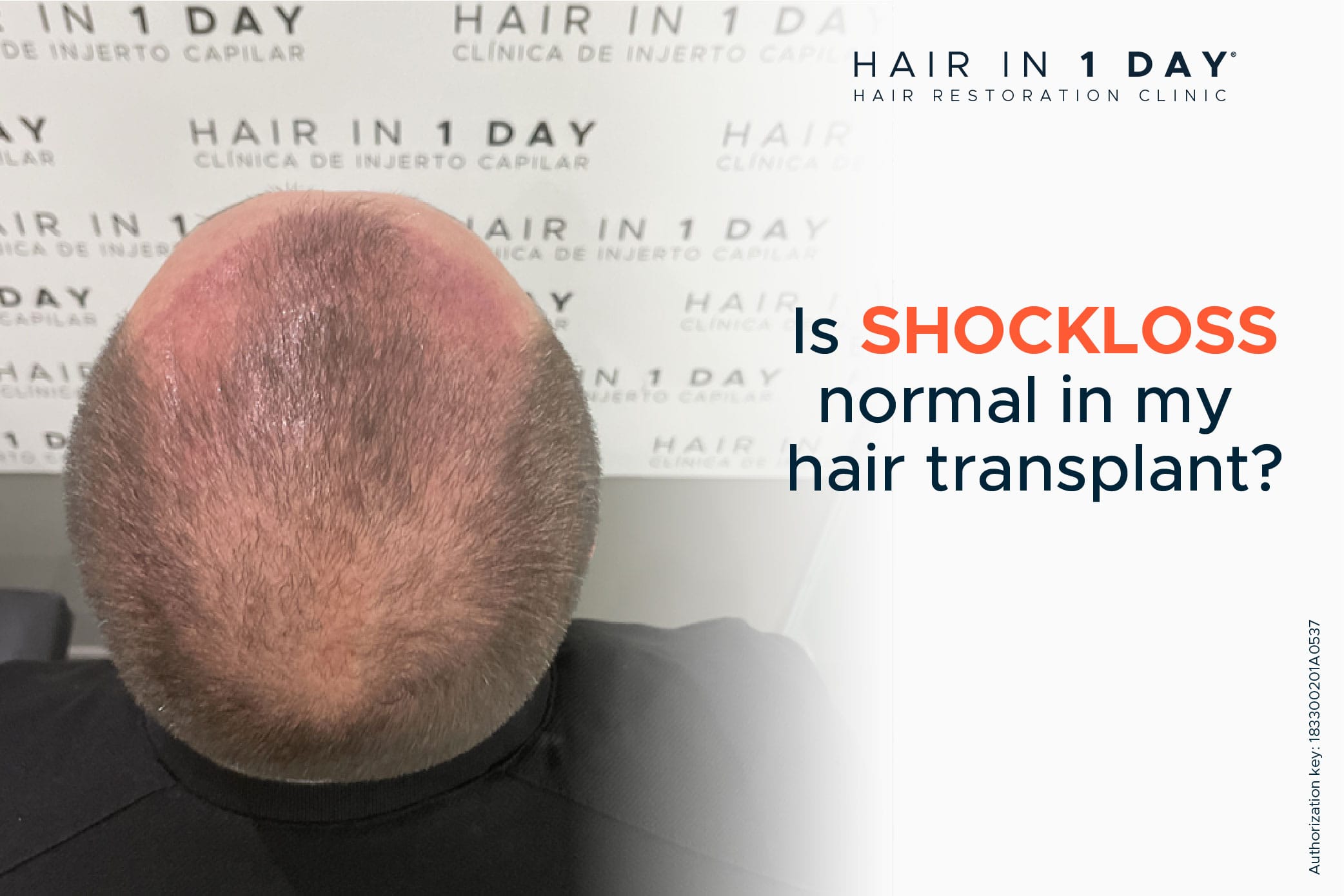
Shock loss is the temporary loss of hair that occurs in the weeks following a hair transplant. It affects both the transplanted hairs and those surrounding the recipient site. Although it may seem alarming, this process is completely normal and expected within the chronology of a successful transplant.
At Hair In 1 Day (H1D), we explain this point to each patient from the initial assessment, since understanding the behavior of the scalp after the procedure is key to maintaining peace of mind during recovery, the process does not end in the operating room: it is a staged evolution.
WHY DOES SHOCK LOSS OCCUR?
After a hair transplant, the body goes through a natural response to the trauma caused by the intervention. Although the procedure is minimally invasive, the scalp interprets the manipulation as an aggression, which can cause the hair follicles to enter a resting phase known as telogen, and thus the hair to fall out.
This effect usually manifests itself between the second and sixth week after the procedure and is temporary. The transplanted follicles remain in the scalp and begin to produce new hair after approximately the third or fourth month.
IS IT A CAUSE FOR CONCERN?
Definitely not. Hair loss after transplant, although it can generate anxiety, is a sign that the process is evolving correctly. In our article on phases of a hair graft, we detail how this fall gives way to a new growth cycle, which culminates with visible and satisfactory results after the sixth month.
TIPS FOR COPING WITH SHOCK LOSS
Although shock loss cannot be avoided, it is possible to reduce its impact and manage it properly with the right accompaniment. Here are some key tips:
1. STAY CALM AND FOLLOW MEDICAL INDICATIONS.
Anxiety can aggravate the perception of the process. Trusting your specialist and the post-procedure plan is critical.
2. FOLLOW A POST-TRANSPLANT HAIR CARE ROUTINE
A good hygiene routine and the right products will help keep the scalp clean and free of infections. In our article "5 Beard Grafting Care".We address similar routines that also apply to the general care of transplanted hair.
3. AVOID EXCESSIVE STRESS
Stress is not only a contributing factor to hair loss, but can also interfere with recovery.
4. USE COMPLEMENTARY TREATMENTS
In H1D we recommend, when the case requires it, to integrate the treatment Nutriplus to strengthen follicles and accelerate recovery.
ACCOMPANIMENT MAKES THE DIFFERENCE
One of the advantages of having your hair transplant done with us at Hair In 1 Day is that we not only use a patented technique such as H1D XTRA CAREWe accompany you in every phase of the process, including the shock loss stage. Our specialists are with you to answer your questions, follow up with you and make sure you have a safe, clear and reliable experience.
SHOCK LOSS IS TEMPORARY, THE RESULTS ARE PERMANENT
In summary, yes, shock loss is normal after hair transplant, and is part of the road to a successful recovery. Understanding it, preparing yourself emotionally and following the proper recommendations will make a difference in your experience and results.
Are you considering a hair transplant?
Schedule your free assessment with our H1D specialists and find out if this is the ideal solution for you.

 Español
 English